Health & Fitness
Chicago Wilderness Panel Sheds Light on Future of Chicago Area Waterways
"Re-imagining the Chicago and Calumet Rivers for the 21st Century and Beyond" was the focus of a panel at the Chicago Wilderness Congress recently.
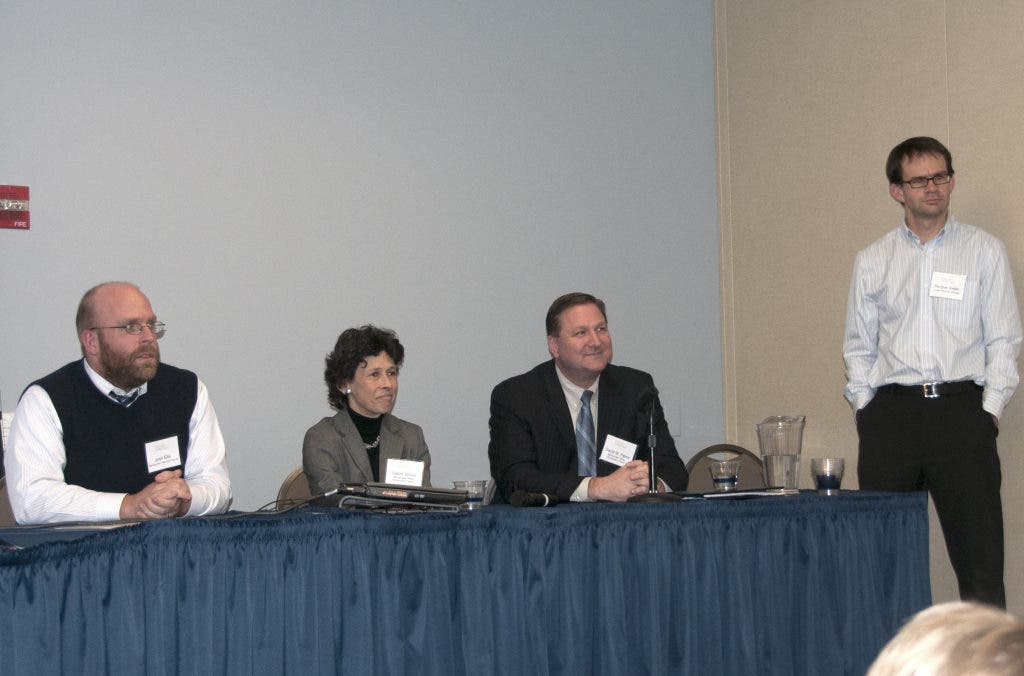
The Chicago River is quickly becoming Chicago’s second waterfront, and the river’s past, present and future was the focus of a panel held during the 2012 Chicago Wilderness Congress at the University of Illinois at Chicago on Nov. 15. Chicago Wilderness is a regional alliance dedicated to protecting nature and enriching life.
The “Reimagining the Chicago and Calumet Rivers for the 21st Century and Beyond” session featured Dr. Reuben Keller, Professor of Environmental Science at Loyola University Chicago, Metropolitan Water Reclamation District of Greater Chicago (MWRD) Commissioner Debra Shore and Executive Director David St. Pierre, and Josh Ellis, Program Director, Metropolitan Planning Council.
Keller provided a historical perspective of the region, and pointed out how the quality of the water in the Chicago Area Waterway System (CAWS) has dramatically improved over the past 123 years, making kayaking and other water sports possible. Commissioner Shore explained MWRD’s role in developing and improving the CAWS, beginning with the need to dilute the waste and sewage that flowed into streets, ditches and then the Chicago River.
Find out what's happening in Elmhurstwith free, real-time updates from Patch.
“Typhoid fever and cholera posed significant public health threats so to prevent future outbreaks, the Illinois legislature established the Sanitary District of Chicago in 1889, now the MWRD,” Commissioner Shore explained. “The District broke ground on the main channel of the Sanitary and Ship Canal three years later and completed the project by 1900, reversing the flow of the Chicago River. Water was diverted from Lake Michigan to dilute sewage and flush it downstream.”
Construction of seven wastewater treatment plants followed over the years. Now the MWRD is installing disinfection equipment at the Calumet and Terrence J. O'Brien (formerly the North Side) Water Reclamation Plants. Once the Tunnel and Reservoir Plan’s Thornton Reservoir comes online by 2015, the quality of the CAWS and incidents of flooding will drastically improve.
Find out what's happening in Elmhurstwith free, real-time updates from Patch.
St. Pierre discussed the MWRD’s plans for the future and the improvements that will benefit water quality. One stretch of the Chicago River is of particular concern, Bubbly Creek.
“The MWRD is working with the University of Illinois to address the lingering effects of the pollution that persists at Bubbly Creek,” St. Pierre said.
From 1865 through 1971, the Union stock yards used Bubbly Creek as a dumping ground for animal carcasses, grease and other discards. The water remains polluted, still bubbling methane and hydrogen sulfide gases which escape from byproducts of the decomposing materials.
“For over 100 years the site suffered from significant abuse, and we are making headway in reversing the effects of Bubbly Creek’s history,” explained St. Pierre. “That’s why our partnership with the University of Illinois is vital. Having a better understanding of the pollutants can help us learn what processes are needed to make water quality improvements.”
The MWRD is also pursuing best practices for the recovery and reuse of phosphorus and nitrogen from the wastewater treatment process. “In excessive amounts, these nutrients impact water quality, but if they are removed from the water stream, they can be returned to the soil as fertilizers for agriculture production," said St. Pierre. "This is one of the many processes the MWRD is currently pursuing that will have a positive impact on water quality.”
Ellis pointed out the important role the CAWS serves as a transportation venue for all size boats, but especially large barges that carry loads that otherwise would be traversing area highways via truck. He also explained that the MWRD, as the second largest landowner in Cook County, leases its properties at low cost to the public, “providing opportunities for improving the quality of life for area residents, and helping communities along both the Chicago and Calumet rivers reach their full economic and environmental potential.”
Our water environment…Take it personally.